Showing posts with label Cornell Plantations. Show all posts

Tuesday, July 3, 2012

Cornell Martha Young Garden

The Cornell Plantations gardens are full of color.  The annual poppies are in bloom and were full of bees this week.  There are also several varieties of iris as well as many upright lilies.  Here are some samples of flowers that I photographed in the late morning this week. The sun was almost too harsh in some instances.

Iris

Daisies

Allium

iris

Lilies

Lilies


Lilies

Daisies

Cana on the patio

annual poppy

Annual poppy

Sunday, June 10, 2012

Meaning of Flowers: Iris

The Martha Young Garden at the Cornell Plantations is focused on the cultural meaning of flowers and has illustrations in the garden about the focus plants in the garden, with reflections on their meanings in many cultures.  The photos taken here were taken yesterday after the Cornell Reunion tour I gave to the class of 62 and 72.

Here is a passage from an on line site about the meaning of flowers, specifically the iris, which happens to be flowering in the garden.


History and Meaning of Iris
by Samantha Green

Primary Significance: With history dating back to Greek mythology, irises come in a rainbow of colors, the most popular being the deep blue variety. Their primary meanings include faith, hope, wisdom, courage, and admiration.

With striking uniqueness and beauty, irises have rich meanings, and when given as gifts, they can convey deep sentiments. With over 200 varieties in a wide spectrum of colors, the iris, which fittingly takes its name from the Greek word for "rainbow," can be found in virtually every part of the world, growing both naturally and in farms. While garden irises can come in any of these many varieties, the flower's cut versions are mostly blue (the most popular type), white, and yellow.
The iris's history is rich, dating back to Ancient Greek times when the Greek Goddess Iris, the messenger of the gods and the personification of the rainbow, acted as the link between heaven and earth. Purple irises were planted over the graves of women to summon the Goddess to guide the dead in their journey. Ancient Egyptian kings marveled in the iris's exotic nature, and drawings have been found of the flower in a number of Egyptian palaces. During the Middle Ages, the meaning of irises became linked to the French monarchy, and the Fleur-de-lis eventually became the recognized national symbol of France. From their earliest years, irises were used to make perfume and as a medicinal remedy. Today, they are primarily seen in gardens, in bouquets, and in the wild all over the world.
Through its intricate history, the meanings of the iris has come to include faith, hope, and wisdom. Depending on factors such as color and region, irises may bear additional meanings as well. In some parts of the world, the dark blue or purple iris can denote royalty, whereas the yellow iris can be a symbol of passion. Irises may also express courage and admiration.


Today, the iris is the state flower of Tennessee, and the Fleur-de-lis is the emblem for the city of New Orleans. Irises are cultivated all over the world, and they can be found naturally in Europe, the Middle East, northern Africa, Asia, and North America.

Wednesday, June 6, 2012

Cornell Botanical Gardens on 6.6.12

A must see is the huge flower of the Gigantic Magnolia flower that is in bloom on a tree in the Botanical Garden, right behind the Lewis Building.  Lewis himself obtained a seed for this tree in 1963 from its native habitat in the South.  The tree has survived here due to the micro climate of a protected area between the Lewis building and the Rhododendron Knoll.

In the Young garden, there are many different iris in bloom.  One can read about the cultural use of iris in the book provided in the garden. That is a nice touch for a visit.

Giant Magnolia

peony

iris

iris

iris

iris

poppies

Poppies

poppies
In the herb garden, there are three types of poppies in bloom.  Although it was mid day when I took these pictures and the wind was starting to ruffle the flowers, I was able to obtain some decent images.

Tuesday, April 3, 2012

Cornell Plantations Winter Garden

The docents for the Cornell Plantations took a review tour of the Winter Garden at the Plantations that was originally made possible through funding by Whitey Mullestein.  The season for tours is quickly upon us, even earlier due to the mild winter.

The Winter Garden was designed to be attractive to both students and other guests during the winter season when the ground is usually covered with snow.  The hardscape of the garden includes Llenroc flagstone retaining walls, stone paths, and a large millstone.  The millstone reminds us of the many mills that provided employment years ago along Fall Creek.  Ezra Cornell was involved with working with Beebee (as in Beebee Lake) with his mills before Ezra was president of Cornell University.

I tried to capture some of the elements of the Winter Garden, namely the colors of the evergreens, the varying shapes of the trees and bushes, and the color and textures of the bark.  Come and visit the garden as well as the Brian Nevin welcoming center where there is a gift shop and rotating art displays. http://www.cornellplantations.org/

The following quote is from that website:

"Mullestein Winter Garden

Plantations’ newest garden, this one-acre site contains over 700 plants chosen for their interesting bark texture, bark color, unusual growth habits, winter fruit, cones, or evergreen foliage. These qualities provide color and interest during Ithaca’s long winters, making the winter garden a year-round destination for visitors. Plants found in the garden include shrubby dogwoods, willows, birches, hawthorns, and small conifers in different shades of blue, silver, green, and gold, which provide an attractive backdrop for the bright fruit and bark colors."


Here are some photos I took today.

Millstone

Path to Young garden

Add caption


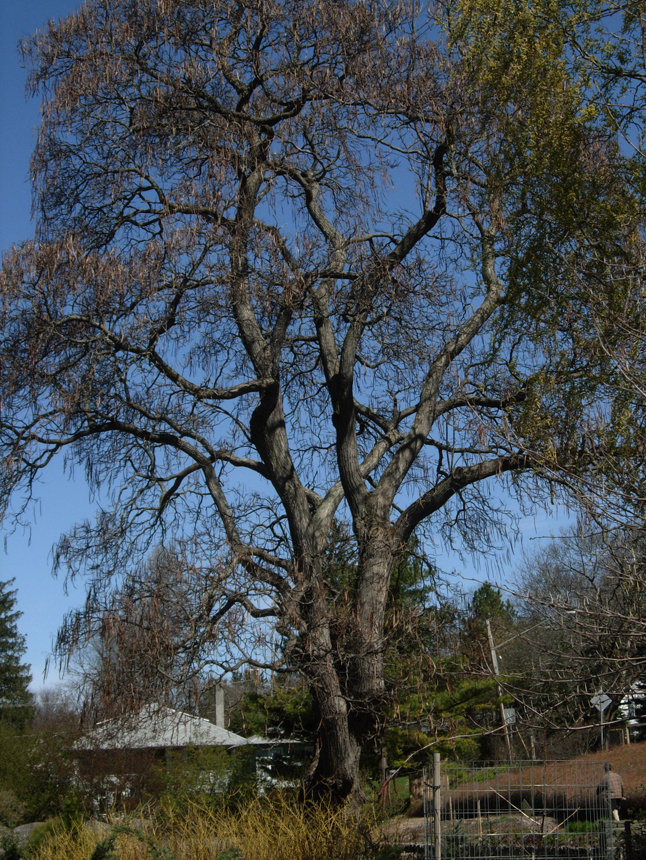
Catalpa tree in Young garden

Bark on River Birch

Bark on White Birch

River Birch

Notice many shapes and colors of evergreens

Sunday, September 18, 2011

Judy's Day at Cornell Plantations

The sun was warm and children of all ages took part in the Judy's Day celebration at the Cornell Plantations.  Judy was a mentor, teacher, and friend of the Plantations and this event honors her many contributions.

Children were taken back in time to experience life as it was without ipods and pads, where life seemed simpler.  They learned how to knit, tat, peel applies with a metal peeler, make baskets, move stones with a horse drawn sled, quilt, stuff mattresses, roll candles, and so many other skills. Everyone seemed quietly festive while they lived life for a few hours as our ancestors had done.

Here are some photos taken today.


Tuesday, August 9, 2011

Cornell Plantations Botanical Garden Tour

This evening, I gave a tour of the Botanical Garden for the Cortland Garden Club.  With a light mist to start the tour, it ended with a rainbow.  The Brian Nevin Welcome Center was closed this evening, but is open during the week other than Mondays.

We toured through the Container Garden, the Ground Cover gardens, talked about the Rhododendron garden that blooms in May, discussed the giant Magnolia that is unique to this climate, then moved into the herb garden with 17 different sub gardens.  On to the Young Garden that focuses on plants and our senses and celebrations. We finished in the Winter Garden with its huge millstone. While there, we talked about the Heritage Garden and the Barbara McClintock shed and her research. One hour went quickly!

Here are some photos I took prior to the arrival of the club members.